
Introduction
Enterprise Resource Planning (ERP) systems have long been a crucial tool for managing business processes across organizations. However, traditional ERP systems have often been associated with complexity and a heavy reliance on IT teams for customizations, integrations, and updates. As businesses evolve and demand more agility, a new trend is reshaping how companies use ERP: low-code and no-code ERP platforms.
These platforms enable business teams—often without coding expertise—to design, modify, and deploy ERP workflows quickly. Instead of waiting for weeks or months for IT teams to make changes, employees can now create dashboards, automate processes, or adjust workflows in a matter of hours. The result? Faster innovation, reduced costs, and greater autonomy for business teams to tailor their ERP systems to their unique needs. In this blog, we’ll explore how low-code and no-code ERP platforms are empowering business teams, their benefits, challenges, and why they are poised to become a dominant force in enterprise technology by 2025.
The Challenge with Traditional ERP
While traditional ERP systems have been pivotal in centralizing business processes, they come with several significant drawbacks that have made them less adaptable to today’s fast-paced business environment:
- High IT Dependency: Customizing ERP modules and workflows often requires months of developer effort, leaving business teams with limited control over the system.
- Costly Upgrades: Even minor changes or customizations typically require expensive consulting fees or the hiring of specialized software development firms.
- Slow Response: Business teams often face long delays while waiting for technical support to implement changes, affecting the pace of innovation.
- Innovation Bottleneck: Non-technical employees, including managers and frontline staff, often cannot experiment or build their own solutions, stifling creativity and agility.
These challenges are driving the demand for ERP platforms that are more flexible, agile, and easier to use by non-technical users. This is where low-code and no-code ERP solutions come in, empowering business teams to innovate without waiting for IT intervention.
How Low-Code / No-Code ERP Empowers Teams
Low-code and no-code ERP platforms allow organizations to customize and streamline their workflows without writing any code, reducing the reliance on IT and giving business teams the flexibility they need to respond quickly to market changes. Let’s explore how these platforms are transforming ERP systems:
- Drag-and-Drop Workflow Builders
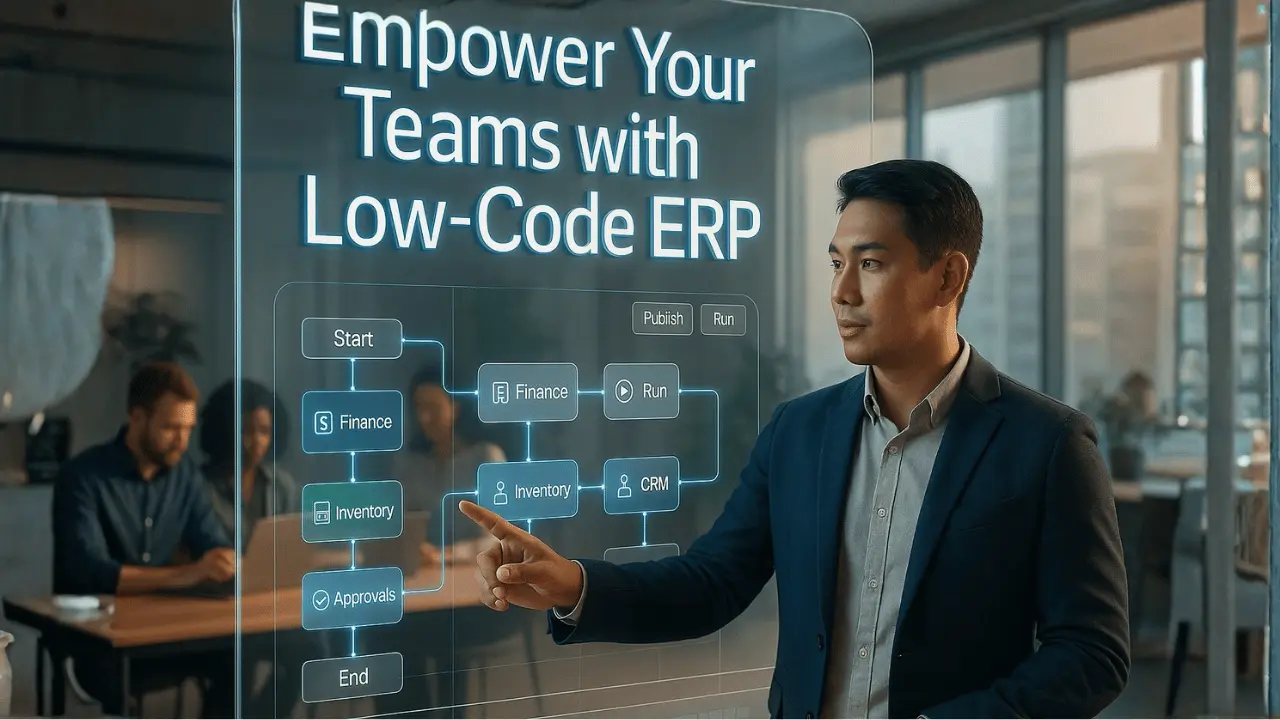
One of the key features of low-code ERP platforms is the drag-and-drop workflow builder. Users can visually create approval flows, dashboards, reports, and even automate tasks without needing to know a single line of code. This ease of use allows teams to quickly design processes and test them in real-time, without waiting for IT developers to step in.
Whether it’s building a custom approval process for purchase orders or creating a reporting dashboard that provides key performance indicators (KPIs) in real time, these platforms put the power directly in the hands of the business user. - Faster Time-to-Value
In traditional ERP systems, customization and updates often take months. However, with low-code and no-code platforms, business teams can design and implement workflows in a matter of days or weeks—not months. This drastic reduction in time-to-value enables businesses to adapt and respond to changing needs much faster than ever before.
By empowering business users to make changes without waiting for IT, organizations can be more agile and take advantage of opportunities in real-time. - Democratization of ERP Development
Low-code/no-code ERP platforms democratize the development process, enabling frontline employees, department heads, and managers to actively participate in shaping the processes that affect their day-to-day operations. This shift from IT-centric development to business-centric customization leads to better alignment between business needs and technology.
Employees who understand the intricacies of their roles can tailor ERP systems to fit those needs, ensuring more accurate and effective workflows. - Cost Reduction
The flexibility provided by low-code and no-code ERP platforms can lead to significant cost savings. First, organizations save on expensive IT consulting fees, which are often necessary for traditional ERP systems to make customizations. Second, by enabling business teams to take control, companies can reduce the need for extensive development projects, which are typically time-consuming and costly.
In fact, many businesses that adopt low-code ERP platforms report substantial savings in IT-related expenses. - Seamless Integration
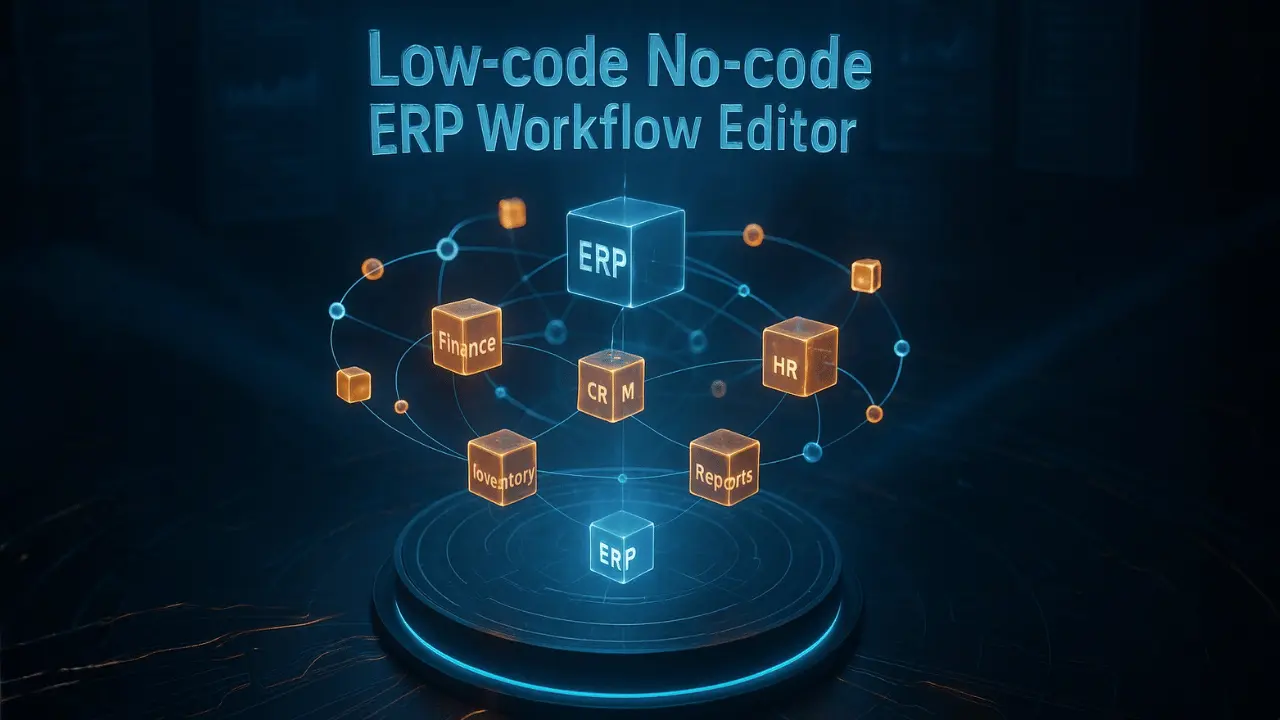
Low-code ERP platforms are often designed to integrate seamlessly with cloud ERP, CRM, HR, and finance systems. This is especially important as many organizations now operate in multi-system environments. With pre-built connectors and APIs, low-code platforms make it easy to integrate with other essential tools, creating a cohesive ecosystem for managing all business operations.
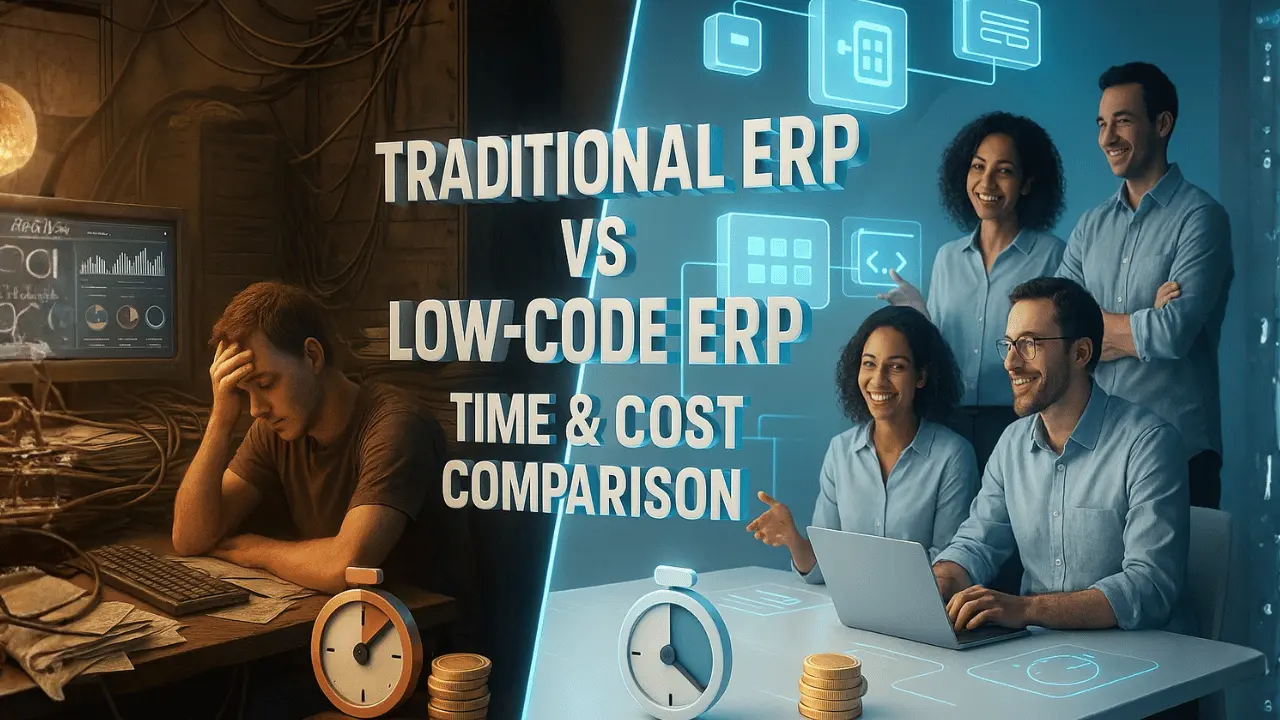
Data, Stats & Case Study
To further illustrate the growing importance of low-code ERP, here are some statistics and a real-world example:
- Gartner Prediction: By 2026, 75% of ERP customizations will be built using low-code or no-code platforms, showing a clear shift toward more agile and business-friendly solutions.
- Forrester Research: Businesses adopting low-code ERP report 30-50% faster delivery times for new workflows and customizations.
Case Example:
A retail chain using Odoo ERP with a low-code extension achieved a 40% reduction in process automation time. Store managers were able to automate inventory workflows, saving valuable time and reducing errors without needing IT intervention. This allowed the business to better manage stock levels, improve ordering processes, and respond faster to customer demands.
Call To Action
ERP is no longer a system solely controlled by IT teams. With low-code and no-code platforms, business users can now take control of their processes—building solutions faster, reducing costs, and unlocking greater agility.
At QIC Training & Consultancy, we specialize in helping organizations implement low-code ERP strategies that balance flexibility with governance. Whether you’re looking to improve efficiency or enable faster decision-making, we can guide you in adopting these powerful tools.
👉 Start the conversation and see how your teams can innovate without heavy IT dependency.
Conclusion
The future of ERP is evolving rapidly. Low-code and no-code ERP systems are shifting the balance of power, allowing business teams to take charge of their processes and innovations without relying heavily on IT support. This evolution enables organizations to respond to market changes faster, reduce costs, and improve operational efficiency. As businesses strive for greater agility and collaboration, low-code ERP is quickly becoming a necessity for staying competitive in 2025 and beyond.
FAQs
From Skills Gaps to Business Wins
From Skills Gaps to Business Wins
Take the First Step.