Corporate Well-Being • Mindfulness • Stress Resilience
From Stress to Strength:
Corporate Mindfulness & Well Being Training That Delivers
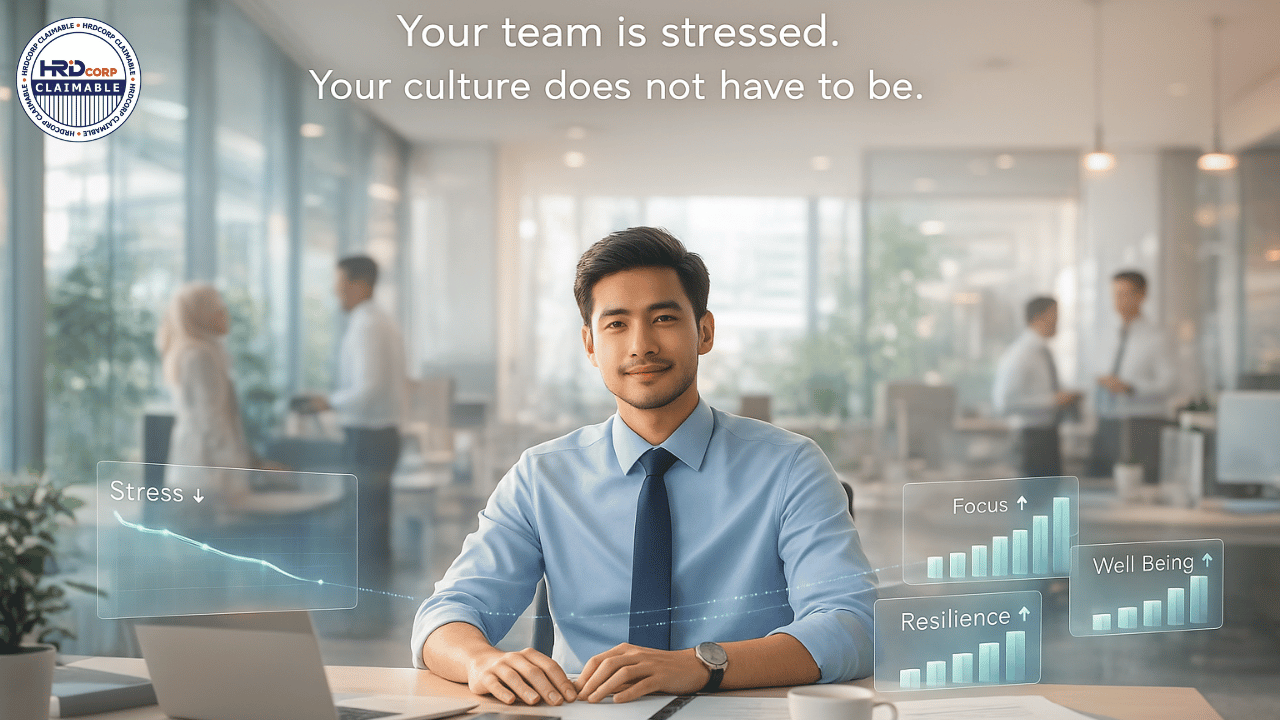
Stress is no longer occasional in Malaysian workplaces. It has become a daily operating condition.
This article explains why one off wellness talks do not stick, and what a structured mindfulness training programme actually changes.
Introduction
Stress is no longer an occasional problem in Malaysian workplaces. It has become a daily operating condition.
Teams are juggling deadlines, reacting to urgent messages all day, handling team tensions, and trying to stay productive while feeling mentally stretched.
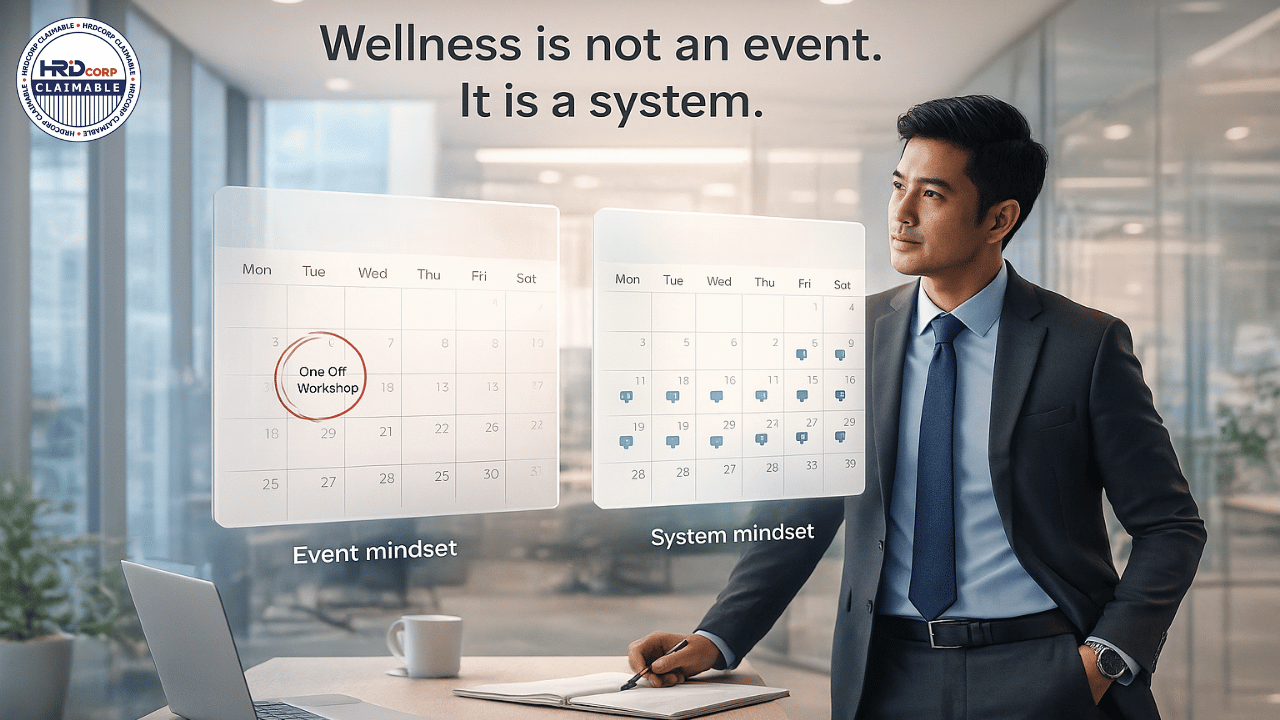
Many companies respond by booking a one time stress talk or a short wellness session. People feel better for a day or two, then real work returns and the pressure takes over again.
This is not because the intention is wrong. It is because most wellness initiatives are treated like an event instead of an employee training program.
They share tips, but they do not change behaviour. They offer motivation, but they do not rebuild emotional habits.
Corporate mindfulness training, when designed as structured corporate training and delivered through a mindset first approach, creates a different outcome.
It helps employees regulate stress, sharpen focus, and respond calmly under pressure.
When it is built into training plans for employees, it becomes a real system for employee development and training, not a temporary boost.
For HR leaders, this matters even more because it fits naturally within human resources training and development.
It can also be structured as HRDC training or HRD Corp training so organisations can invest in corporate wellness training that is HRD Corp claimable and performance linked.
Why stress keeps winning in Malaysian workplaces
Stress is not simply personal. It shows up in performance, decisions, communication, and culture.
Under pressure, teams often fall into predictable patterns. People overthink worst case outcomes, respond emotionally instead of logically, lose clarity under deadlines,
bring work frustration home, struggle to switch off, avoid difficult conversations, and silently burn out before anyone notices.
A commonly reported pattern across workplaces is that employees are trained for tasks, but not trained for internal stability.
Organisations expect people to perform in high pressure environments without teaching them how to manage the thoughts, emotions, and triggers that shape behaviour.
This is why mindfulness belongs inside corporate training programs, not outside them. It is a capability.
It is part of employee development training, just like communication, leadership, and productivity.
Why traditional wellness workshops do not create lasting change
Most companies try to solve workplace stress with one time motivation sessions, lunch talks on stress, simple breathing and stretching activities,
or general mental health campaigns. These create awareness, but awareness alone does not create behaviour change.
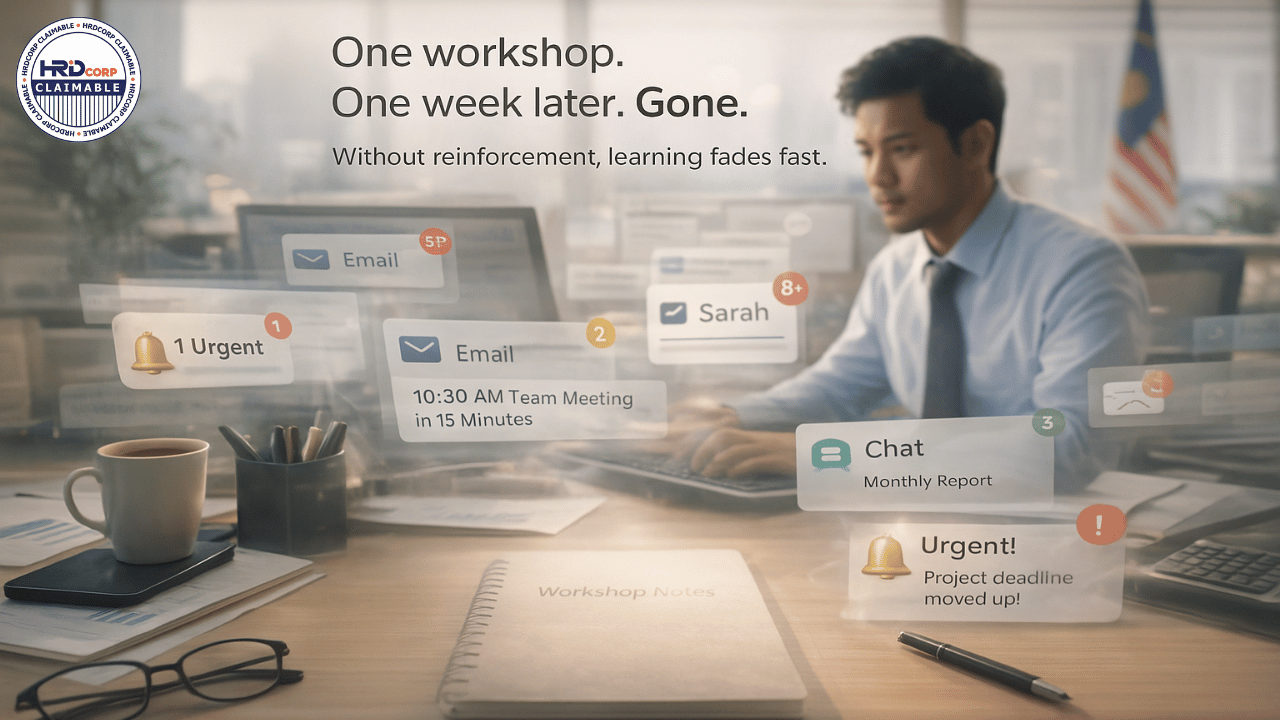
Well being programmes fail when they are a one time event, when they ignore mindset and emotional triggers, when they do not include reinforcement in daily routines,
and when employees return to the same environment without new habits. The result is predictable. People feel better temporarily, but the underlying patterns remain unchanged.
This is the same issue organisations face with many types of company training. Even the best corporate trainer cannot create lasting change when learning is not reinforced.
That is why modern employee training systems focus on application, repetition, and manager support.
The mindset first approach, real well being begins inside
QIC Training’s approach to corporate mindfulness is built on one belief: stress is not the only problem.
The automatic reaction to stress is the bigger problem.
Mindfulness is not just meditation. In workplace settings, it is a psychological and behavioural practice that trains people to stay aware, steady, and intentional under pressure.
When employees learn to pause, observe what is happening inside them, understand the trigger, and choose a better response, resilience becomes natural.
This is where mindfulness becomes part of employee development and training. It strengthens how people think under pressure, how they interpret workplace situations,
how they regulate emotion before reacting, how they break stress cycles, and how they build calm that carries into meetings, customer conversations, and leadership decisions.
Skillset→
Toolset→
Performance
When the mind shifts, behaviour follows. When behaviour improves, performance and well being rise together.
What mindfulness training actually changes at work
Mindfulness training that works is practical, science backed, and designed for daily behaviour, not just theory.
In a well structured employee training program, these outcomes are consistently seen.
A realistic Malaysian case study
A mid sized services company was facing rising turnover, declining morale, and constant communication breakdowns.
Employees were exhausted, and managers were struggling to lead calmly under pressure. Team members described a constant feeling of being “switched on” and unable to mentally rest.
The company implemented a six week corporate training program that combined mindfulness, emotional agility, and practical workplace routines.
It was structured as an employee development training pathway, not a single session. The program included guided techniques, short weekly practice routines,
manager reinforcement prompts, and real work application tasks.
Within weeks, communication improved across departments. A majority of participants reported better stress management and stronger emotional control.
Managers became calmer and more empathetic. Conflict incidents reduced, employees felt more in control of workload, and productivity improved without forcing longer hours.
That is what happens when mindfulness is delivered as real corporate training, supported by training plans for employees,
and reinforced through a structured staff training program.
How QIC Training builds stress resilient teams
QIC Training’s corporate well being programmes combine mindfulness, behaviour science, and emotional intelligence.
They are designed for Malaysian workplaces and delivered in a way that supports real behaviour change.
A typical programme includes behaviour change frameworks, stress trigger analysis, guided on ground mindfulness techniques,
communication and emotional agility skills, tools to build daily mental habits, and short micro learning reinforcements to make the learning stick.
Most importantly, it is built to fit into how organisations actually run corporate training programs.
It can be structured as HRDC training or HRD Corp training, and it can be HRD Corp claimable, depending on your internal plan and scope.
If you are an HR leader designing human resources training and development, this becomes a powerful addition to your employee training program
because it supports not only well being, but also leadership consistency, communication quality, and culture health.
Frequently asked questions
Conclusion
Workplace stress is not going away. But how teams think, respond, and behave under stress can be transformed.
Mindfulness training done correctly helps employees regain control of the mind, build resilience, and operate from clarity instead of overwhelm.
Organisations that invest in internal stability do not just reduce burnout. They build stronger cultures, stronger leaders, and stronger performance.
If you want real change through corporate training, do not treat well being as a one off session.
Treat it as an employee development program with reinforcement and structure.