Introduction
Every year, Malaysian organisations spend millions on corporate training. Calendars fill up with leadership development programmes, communication workshops, emotional intelligence courses, and HRDC claimable soft skills training. Yet despite the investment, something frustrating keeps happening: people attend, they enjoy the sessions, they nod along – and then very little changes back at work.
This isn’t because Malaysians are unwilling to learn. It’s because most training skips the one thing that actually determines whether learning sticks: mindset.
Skills are easy to teach. Behaviour is not. The ability to communicate clearly, manage emotions, think critically, resolve conflict, and lead people requires more than knowledge – it requires a shift in how someone thinks, sees themselves, and understands their role.
This is where most corporate training in Malaysia collapses. It teaches the “what” and the “how,” but it never activates the “why.” And without the “why,” nothing changes.
Why Corporate Training Fails (The Truth No One Says Out Loud)
A familiar pattern plays out in almost every Malaysian organisation. Training is treated as a remedy – performance down, send people for a course; conflict rising, book communication training; team stressed, try a mindfulness at work workshop; innovation slowing, sign up for design thinking Malaysia.
But what happens after all that effort? People return to the same workload, the same culture, the same assumptions, and the same fears. The new skills they learned don’t stand a chance.
Training fails not because it teaches the wrong things, but because it teaches those things to people who haven’t shifted what they believe. A manager who believes “conflict is dangerous” will never use tools from a negotiation skills training. An employee who believes “my ideas don’t matter” won’t apply creative thinking techniques. A supervisor who believes “people must be controlled” will ignore every principle from leadership development Malaysia workshops.
In Malaysia especially, culture plays a huge role. Many employees avoid directness to maintain harmony. Many managers hold back feedback because it feels rude. Teams often choose safety over experimentation. These patterns can’t be solved with more slides or more techniques. They need a shift in mindset.
The Behavioural Blockers Unique to Malaysia
Most countries deal with resistance to change, but Malaysia has a few unique behavioural challenges that training content alone cannot fix.
Politeness often stops people from speaking honestly. Respect for hierarchy makes younger staff afraid to question processes they know are outdated. The desire to “not offend” leads to unclear communication. Many employees prefer staying quiet over taking risks. And in many workplaces, avoiding failure feels more important than trying something new.
These are deeply rooted behaviours. A two-day workshop cannot undo decades of conditioning. This is why soft skills training in Malaysia often feels inspiring in the room but fades once reality hits.
The issue is not the content – it’s the mindset barrier blocking that content from becoming behaviour.
The Missing Ingredient: Mindset-First Learning
Mindset is the filter through which all learning passes. If the filter is blocked with fear, doubt, resistance, or old beliefs, nothing gets absorbed. Mindset-First Learning fixes the foundation before adding new skills on top.
This approach doesn’t start by teaching how to manage conflict, lead teams, influence stakeholders, or communicate more clearly. It starts by asking why someone avoids conflict, fears giving feedback, struggles to lead, or hesitates to speak up.
Once people understand the story behind their behaviour – the beliefs, fears, assumptions, and habits – only then do new skills have space to take root.
Mindset-first learning turns “I have to do this” into “I want to do this,” and that is the difference between temporary inspiration and permanent change.
Why Malaysian Companies Need Mindset-First Training Now
Malaysia’s workplace is changing faster than ever. Hybrid work has made communication harder. Younger employees expect empathy, clarity, and purpose. Digital transformation requires adaptability and resilience. Leaders face pressure to make faster, smarter decisions. Teams are experiencing unprecedented levels of stress and burnout.
In this environment, old leadership styles no longer work. Technical skills aren’t enough. Behavioural maturity is now the true competitive advantage.
A mindset-first approach prepares people to navigate uncertainty, manage emotions, stay open to feedback, and lead with clarity instead of reacting from stress. Without this shift, no amount of HRDC claimable training will create measurable performance change.
What Mindset-First Learning Looks Like (QIC’s Always-On Model)
Mindset-First Learning follows a deeper, more human process. At QIC Training, this is delivered through the Always-On Learning Model – a framework designed to help people understand themselves, shift their beliefs, and practise new behaviours consistently.
The journey begins with discovering mindset gaps and identifying the beliefs that shape current behaviour. It then moves into designing a programme tailored to the culture, challenges, and goals of the organisation. Delivery focuses on coaching-style facilitation, reflection, and real-work scenarios instead of information dumping. Development happens through ongoing reinforcement, because behaviour only changes with repetition. And the final stage demonstrates change through measurable shifts in communication, leadership, engagement, and performance.
It’s training that doesn’t end when the slides close. It continues until behaviour changes – because behaviour is the real KPI.
The Results Malaysian Organisations Experience With Mindset-First Learning
When mindset shifts, everything else changes naturally. Teams communicate with far more clarity because they feel safe being honest. Managers begin leading people instead of just managing tasks. Employees become more proactive because they no longer fear making mistakes. Workplaces experience fewer emotional blow-ups because emotional intelligence becomes part of daily behaviour.
Productivity rises because people stop wasting energy on unspoken conflicts and unclear assumptions. And job satisfaction improves because people finally understand how their work connects to purpose.
These improvements don’t come from more techniques, tools, or training slides. They come from shifting how people think, which shifts how they behave, which finally shifts how they perform.
HRD Corp and the Future of Behaviour-Driven Training
The direction of HRD Corp aligns perfectly with this shift. Many HRDC claimable courses already support mindset-first development – including leadership behaviour change programmes, emotional intelligence workshops, communication training for managers, critical thinking courses, mindfulness at work, and organisational intelligence sessions.
This means Malaysian companies can use their levy to build people, not just certify them. They can invest in real transformation, not just attendance sheets. They can fix problems at the behavioural level, not the surface level.
And most importantly: they can finally see training deliver the ROI they’ve been waiting for.
FAQ
Q
Why doesn’t skill-based training stick?
Because people return to old habits when their beliefs don’t change. If the mindset remains the same, new skills compete with old fears, patterns, and assumptions – and the old patterns usually win.
Q
Is mindset-first training HRD Corp claimable?
Yes. Most behavioural and leadership programmes that focus on mindset, emotional intelligence, and communication can fall under HRD Corp, as long as they meet the required criteria.
Q
Does mindset change take long?
Awareness is instant. Behaviour change is gradual – and far more sustainable. With the right structure, reinforcement, and support, people can begin shifting behaviour within weeks, not years.
Q
Can mindset training help underperforming teams?
Most underperformance comes from beliefs, communication patterns, and fear – not lack of skill. Mindset-first training addresses these core issues, which is why it often unlocks performance in teams that have been stuck for years.
Q
How do you measure mindset-first impact?
Through behaviour shifts: better communication, stronger leadership, improved engagement, clearer decision-making, and more consistent performance. These show up in feedback, culture surveys, retention data, and business results.
Conclusion
Corporate training fails in Malaysia not because employees don’t care, or because trainers didn’t try, or because the organisation chose the wrong programme. It fails because it begins in the wrong place.
Skill-first training assumes behaviour will follow. But behaviour doesn’t follow skills. Behaviour follows mindset.
When mindset shifts, everything else becomes easier – communication, leadership, productivity, creativity, and collaboration. Mindset-first learning unlocks the human side of performance, the side that truly determines growth.
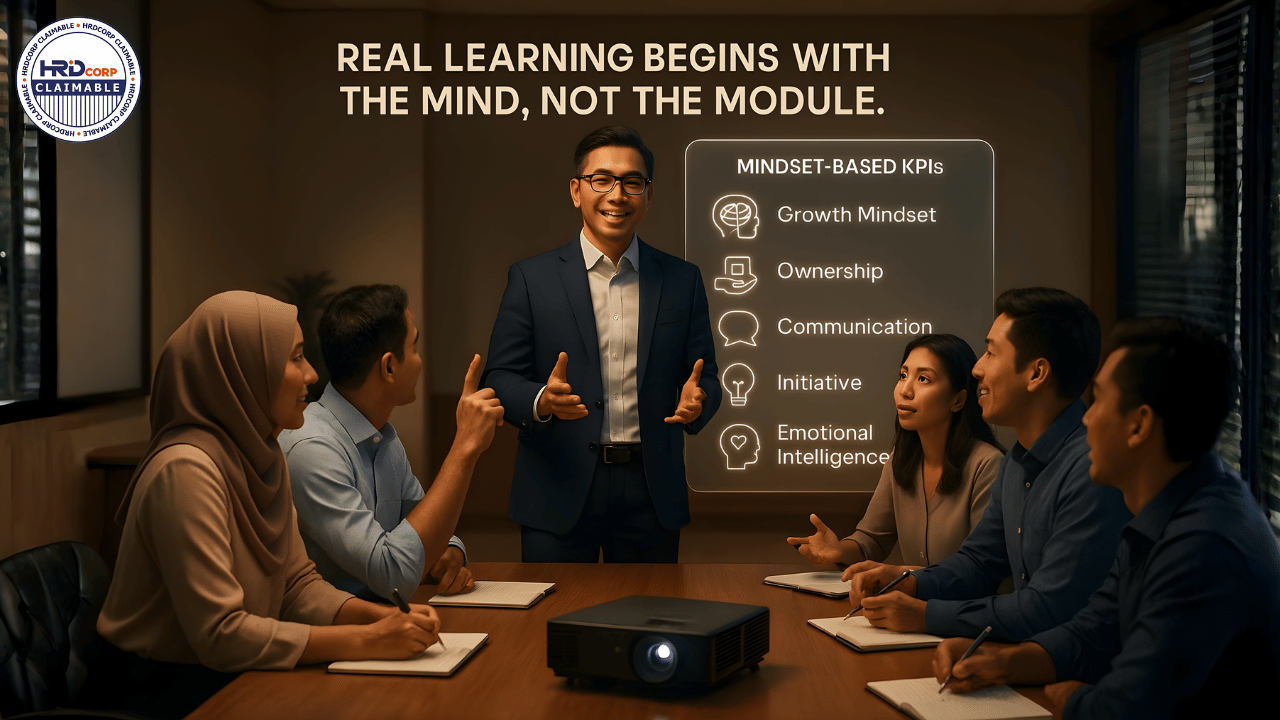
Malaysia doesn’t need more training days. It needs deeper transformation. It needs training that starts with the mind, not the module.
Real change begins with mindset. Real performance begins with behaviour. And real transformation begins the moment people see themselves differently.
Ready to Explore Mindset-First Learning?
To learn how QIC can transform your managers into behaviour-driven leaders, connect with our team and start designing a mindset-first learning journey for your organisation.